What is NOVA Scale? Food Quality Guide
Key Takeaways
The NOVA scale classifies food by the extent of processing, not just nutrients. It reveals why 100 calories of almonds are healthier than 100 calories of soda. Learn the 4 groups, the science of Ultra-Processed Foods (UPF), and how to transform your diet.
For decades, the nutritional world has been obsessed with numbers. We count calories, track macros, measure grams of sugar, and obsess over fat percentages. The prevailing wisdom has been simple: "Calories in, calories out." If you want to lose weight, just eat less.
But if it’s that simple, why are obesity rates climbing globally? Why do we feel hungry even after a "high-calorie" meal? And why do "diet" foods often leave us feeling worse?
The answer lies in food quality, not just quantity. It’s not just about what nutrients are in the food, but how that food was made.
Enter the NOVA Scale, a revolutionary classification system that is changing how nutritionists, doctors, and health-conscious eaters look at food in 2026. It shifts the focus from nutrients to processing.
The Short Answer: What is NOVA?
The NOVA scale is a system that groups food based on the extent and purpose of industrial processing, rather than its nutrient content.
Developed in 2009 by Dr. Carlos Monteiro and his team at the University of São Paulo, NOVA was created to explain a paradox: in Brazil, people were buying less sugar and oil, yet obesity and diabetes were skyrocketing. The culprit wasn't a specific ingredient, but the rise of Ultra-Processed Foods (UPF).
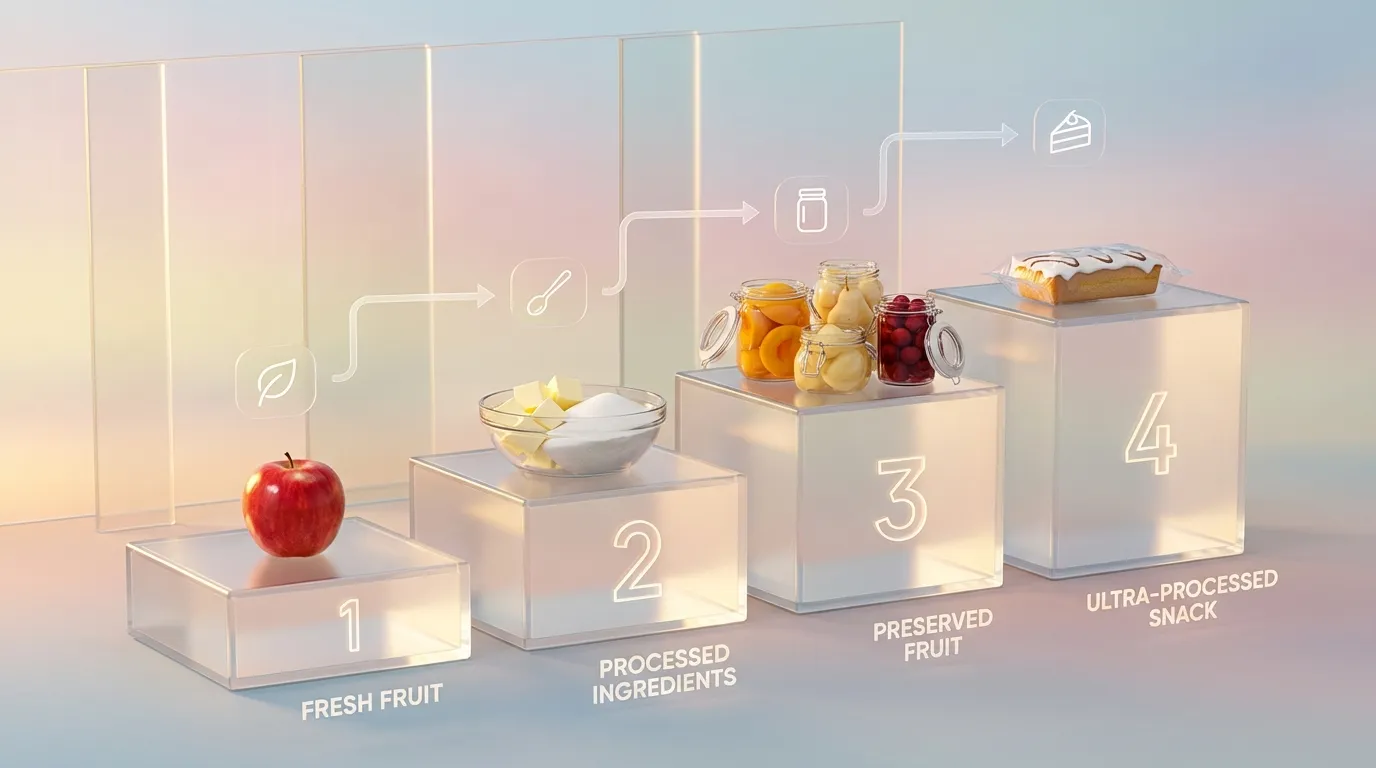
NOVA divides everything we eat into four distinct groups. Understanding these groups is the single most effective step you can take for your health today.
Deep Dive: The 4 Groups of the NOVA Scale
To use the NOVA scale effectively, you need to look beyond the marketing claims on the front of the package and understand what you are actually buying.
Group 1: Unprocessed or Minimally Processed Foods
These are foods as they appear in nature, or with very minor alterations to make them safe, edible, or preserved.
- What they are: The edible parts of plants (seeds, fruits, leaves, roots) or animals (muscle, offal, eggs, milk).
- Allowed Processes: Drying, crushing, grinding, fractioning, filtering, roasting, boiling, pasteurization, refrigeration, freezing, placing in containers, vacuum packaging.
- Key Characteristic: No substances are added to the food.
- Examples:
- Fresh, frozen, or dried fruits and vegetables (without added sugar/oil).
- Rice, corn, wheat berries, oats (plain).
- Fresh or frozen meat, poultry, fish, seafood.
- Eggs.
- Pasteurized milk, plain yogurt (no added sugar).
- Tea, coffee, water.
- Verdict: This should be the foundation of your diet. These foods contain the original food matrix, which regulates absorption and satiety.
Group 2: Processed Culinary Ingredients
These are substances derived from Group 1 foods or from nature by processes such as pressing, refining, grinding, milling, and drying. You rarely eat them on their own; they are used to season and cook Group 1 foods.
- Examples:
- Vegetable oils (olive, sunflower, corn).
- Butter, lard, coconut fat.
- Sugar, molasses, honey, maple syrup.
- Salt.
- Verdict: Use them in moderation to prepare delicious meals from Group 1 ingredients. The goal is not to avoid them, but to use them to enhance real food.
Group 3: Processed Foods
These are relatively simple products made by adding Group 2 ingredients (salt, sugar, oil) to Group 1 foods. They usually have 2-3 ingredients and are recognizable versions of the original food. The purpose of processing here is usually preservation or enhancing flavor.
- Examples:
- Canned vegetables in brine (pickles, peas).
- Canned fruit in syrup.
- Salted or sugared nuts.
- Smoked or cured meats (bacon, ham, jerky) - Note: limit these due to salt/nitrates.
- Cheese.
- Freshly made unpackaged bread (flour, water, salt, yeast).
- Verdict: Fine in moderation. They are often convenient and nutritious. A slice of artisanal bread with cheese is a processed meal, but it is not ultra-processed.
Group 4: Ultra-Processed Foods (UPF)
This is the category that defines the modern industrial diet. These are not "foods" in the traditional sense; they are industrial formulations. They are made mostly from substances extracted from foods (oils, fats, sugars, starch, proteins), derived from food constituents (hydrogenated fats, modified starch), or synthesized in laboratories (flavor enhancers, colors, additives).
- The "Ultra" Processes: Extrusion, moulding, pre-frying, hydrogenation, hydrolysis.
- The Additives: Preservatives, emulsifiers, sweeteners, thickeners, artificial flavors, colors, carbonating agents.
- Examples:
- Soft drinks, energy drinks, fruit drinks.
- Packaged snacks (chips, puffs).
- Mass-produced ice cream and chocolate.
- Pre-packaged, long-life breads and buns.
- Margarine and spreads.
- Cookies, pastries, cakes, and cake mixes.
- Breakfast cereals and energy bars.
- "Instant" soups, noodles, and desserts.
- Chicken nuggets, fish fingers, reconstituted meat products.
- Verdict: Minimize as much as possible. These foods are designed to be hyper-palatable, cheap, and convenient, often displacing nutritious foods from the diet.
The Science: Why "A Calorie Is Not A Calorie"
You might be thinking, "If I eat 2000 calories of chips or 2000 calories of potatoes, isn't it the same for weight gain?"
Science says no.
The Kevin Hall Study (NIH)
In a landmark randomized controlled trial published in Cell Metabolism (2019), researchers led by Dr. Kevin Hall housed volunteers in a metabolic ward. They were given two different diets for two weeks each:
- Ultra-Processed Diet: 80% calories from UPF.
- Unprocessed Diet: 80% calories from whole foods.
Crucially, the meals were matched for calories, sugar, fat, sodium, and fiber.
The Result: When on the Ultra-Processed diet, participants spontaneously ate 500 calories more per day and gained weight. When on the Unprocessed diet, they felt full on fewer calories and lost weight.
Why does this happen?
- Hyper-palatability: UPFs are engineered to hit the "bliss point"—the perfect ratio of salt, sugar, and fat that overrides your brain's "stop eating" signals.
- Speed of Eating: UPFs are often soft and easy to chew (think white bread vs. brown rice). We eat them faster than our gut hormones can signal fullness.
- Nutrient Displacement: UPFs are stripped of the fiber and micronutrients found in the food matrix, leading to "hidden hunger" where you are calorie-rich but nutrient-poor.
- Microbiome Damage: Emulsifiers and artificial sweeteners in UPFs can negatively alter gut bacteria, leading to inflammation and metabolic issues.
Comparison: Calorie Counting vs. NOVA Scale
| Feature | Calorie Counting | NOVA Scale |
|---|---|---|
| Focus | Quantity of energy | Quality of food |
| Complexity | Requires weighing and logging | Requires reading ingredients |
| Satiety | Often ignores hunger signals | Prioritizes nutrient-dense, filling foods |
| Long-term Success | Hard to sustain (hunger) | Sustainable lifestyle change |
| Health Impact | Weight loss (potentially) | Metabolic health & inflammation reduction |
| Mental Load | High (math anxiety) | Low (simple categorization) |
Real World Swaps: How to Apply NOVA
You don't have to live on a farm to eat well. Here is how to swap Group 4 items for Group 1 or 3 alternatives in a typical day.
| Meal | Ultra-Processed (Group 4) | Better Choice (Group 1 & 3) |
|---|---|---|
| Breakfast | Sugary cereal or "fruit" yogurt | Plain yogurt with fresh fruit & nuts |
| Lunch | Instant noodles or supermarket sandwich | Leftover chicken salad or homemade sandwich |
| Snack | Protein bar or potato chips | Apple, hard-boiled egg, or handful of almonds |
| Dinner | Frozen pizza or chicken nuggets | Stir-fry with fresh veg & meat or baked potato |
| Drink | Soda or "Vitamin Water" | Water, tea, or sparkling water with lemon |
Common Myths About NOVA
Myth 1: "All processed food is bad." Fact: No. Processing like pasteurizing milk or canning beans saves lives and makes food accessible. The problem is ultra-processing, which deconstructs food and rebuilds it with chemicals.
Myth 2: "Vegan means healthy." Fact: Not always. Many vegan meat alternatives are Group 4 UPFs, loaded with texturizers, modified starches, and industrial oils. A vegan diet based on whole plants is healthy; a vegan diet based on fake meats is not.
Myth 3: "If it's fortified with vitamins, it's good." Fact: Adding synthetic vitamins to a sugary cereal doesn't make it healthy. It's like putting a band-aid on a broken leg. The health benefits come from the whole food matrix, not isolated vitamins sprayed onto junk food.
How to Start Using NOVA Today
You don't need to be perfect. The goal is to shift the balance of your diet.
- The 80/20 Rule: Aim for 80% of your diet to come from Groups 1, 2, and 3. Treat Group 4 as an occasional indulgence, not a daily staple.
- Shop the Perimeter: Most grocery stores place fresh produce, meat, and dairy on the outer edges. The middle aisles are the "UPF Zone."
- The 5-Ingredient Test: If a product has more than 5 ingredients, and you don't recognize them, it's likely UPF.
- Use Technology: It can be hard to memorize every additive name like "maltodextrin" or "polyglycerol polyricinoleate."
Want to know exactly what's in your food? Stop guessing. Use the Food For You app to scan any food label and instantly see its NOVA score and health grade. We analyze the hidden ingredients so you don't have to. Create your free account today and start eating smarter.
Conclusion
The NOVA scale isn't just another diet trend; it's a return to common sense. It explains why our grandparents were generally leaner and healthier despite not counting calories: they ate food, not products.
By focusing on how our food is made rather than just the numbers on the label, we can regain control over our health, reduce inflammation, and find a sustainable way to eat that actually feels good.
Next time you're at the supermarket, ask yourself: Is this food, or is it an industrial creation? The answer might just change your life.
References
- Monteiro, C. A., et al. (2019). Ultra-processed foods: what they are and how to identify them. Public Health Nutrition. Link to Study
- Hall, K. D., et al. (2019). Ultra-Processed Diets Cause Excess Calorie Intake and Weight Gain: An Inpatient Randomized Controlled Trial of Ad Libitum Food Intake. Cell Metabolism. Link to Study
- FAO. (2024). Ultra-processed foods, diet quality, and health using the NOVA classification system. Food and Agriculture Organization of the United Nations. Link to Report
- Srour, B., et al. (2024). Ultra-processed food intake and risk of cardiovascular disease: prospective cohort study (NutriNet-Santé). BMJ. Link to Study
- Lane, M. M., et al. (2024). Ultra-processed food exposure and adverse health outcomes: umbrella review of epidemiological meta-analyses. BMJ. Link to Review
Frequently Asked Questions
Team Food For You
Reviewed by: Dr. Arthur Price
The Food For You team combines AI technology with nutrition science to help people make safer, healthier food choices.
Learn more about usMedical Disclaimer
The content provided in this blog is for informational purposes only and does not constitute medical advice. Always consult with a qualified healthcare professional for diagnosis and treatment of allergies.
Related Articles
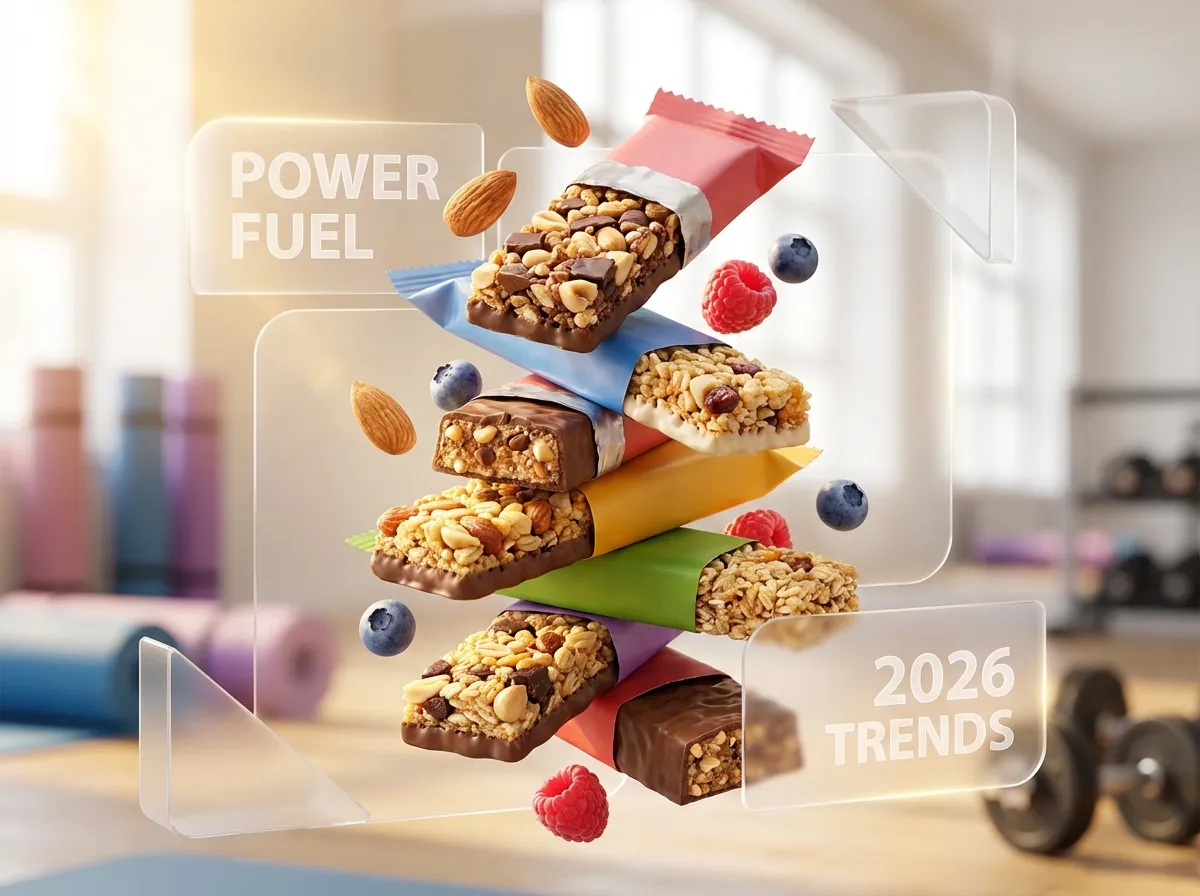
Are Protein Bars Healthy? Top 10 Ranked
We analyzed the top 10 protein bar brands of 2026 using the NOVA scale. Find out which are real food and which are just candy in disguise.
Food For You Guide: AI Food Scanner App
Forget barcodes. Food For You uses advanced AI Vision to analyze food labels and prepared dishes. Discover the most advanced personalized nutrition app of 2026.
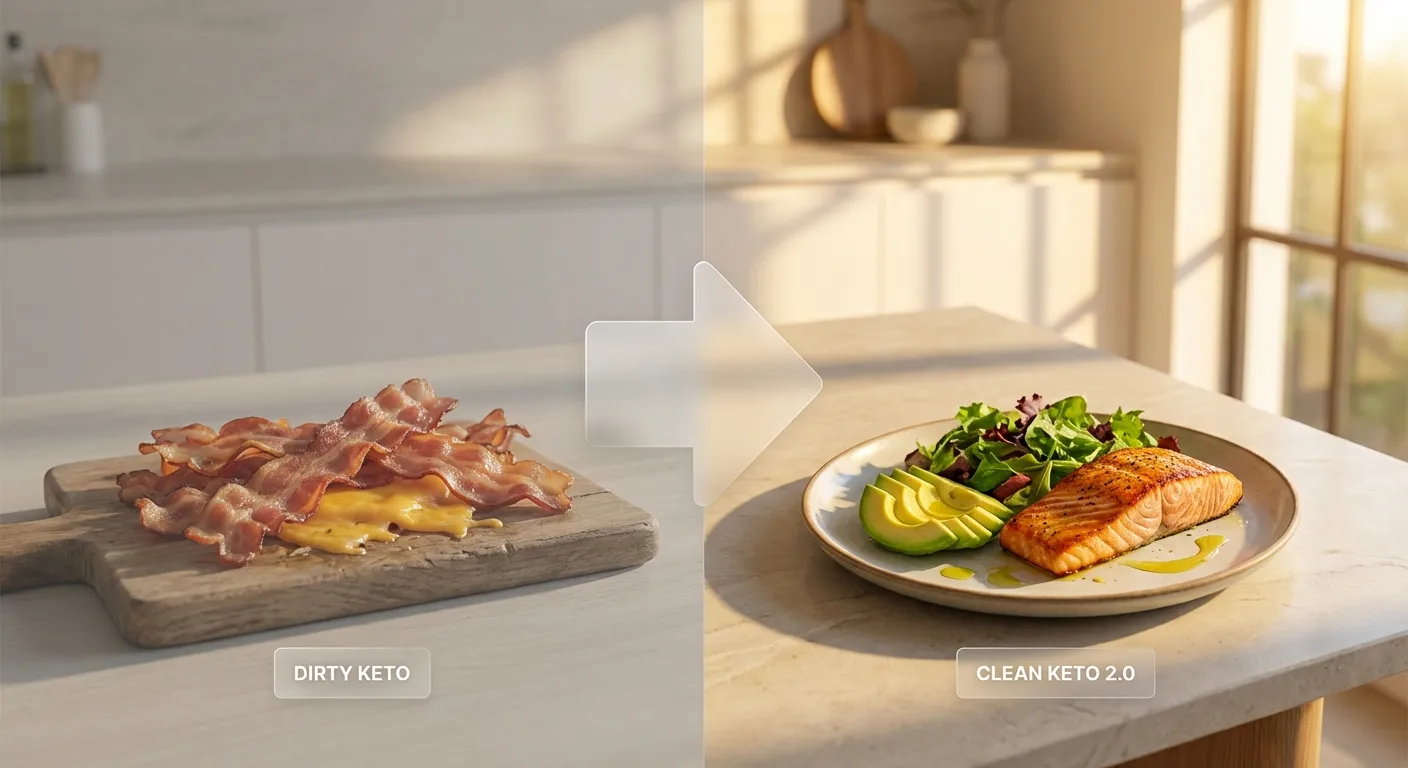
Keto 2.0: From Dirty to Whole Foods Keto
Is your Keto diet harming your health? Discover Keto 2.0, the 2026 approach that prioritizes food quality and gut health over just hitting macros.
